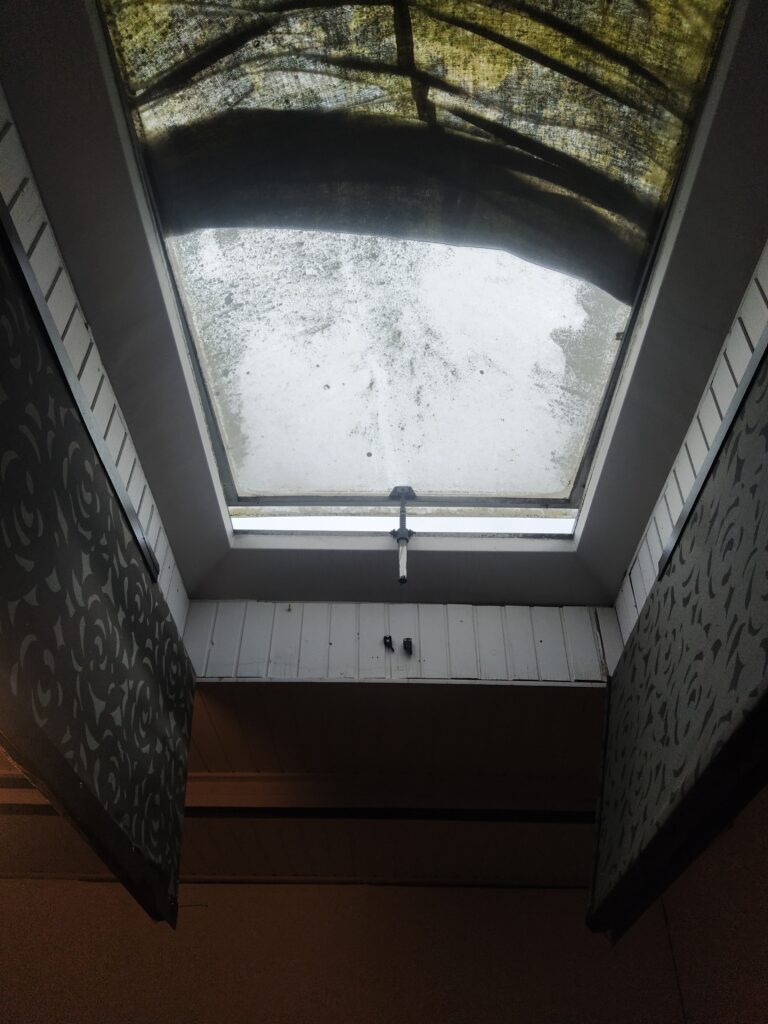
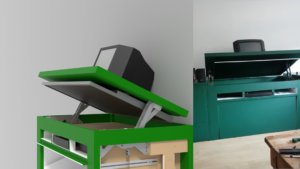
At our home we have a flat roof with several roof domes. They are nice to bring some extra light into the room, except if you want to sleep. So we created hatches for the bedroom such that the light is blocked out. They were kept close with magnets. The things was that pussy cats were desperately trying to get into the bedroom and were forcing their way in through the opening at the dome. Pussy cats are all nice, but not when they jump on you in the middle of the night while you are sound asleep. That is where the snap locks come in; they should better keep the latch close while also being able to open the latch if you would want to.
The roof doom with an opening for fresh air
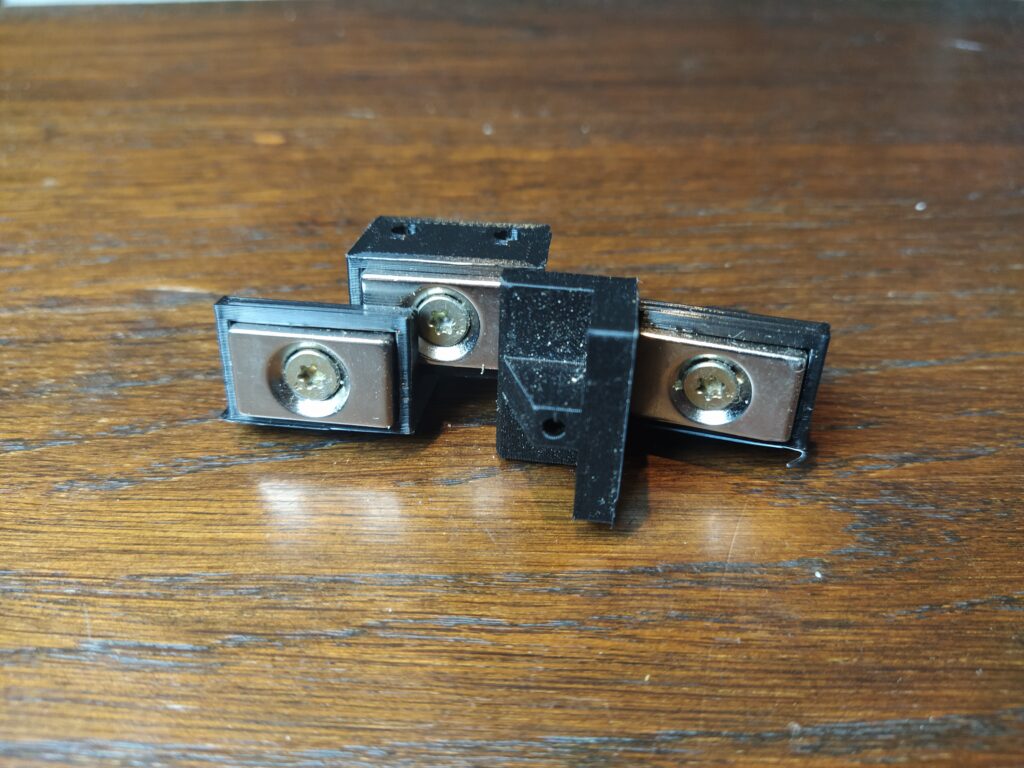
The magnet that kept the latch somewhat closed
There are many examples of push latches or snap locks to be found on the internet. I found the video This Old Tony about the subject very informative and funny. I started the design based on those principles trying to make it work for a latch that can move independently from the static part.
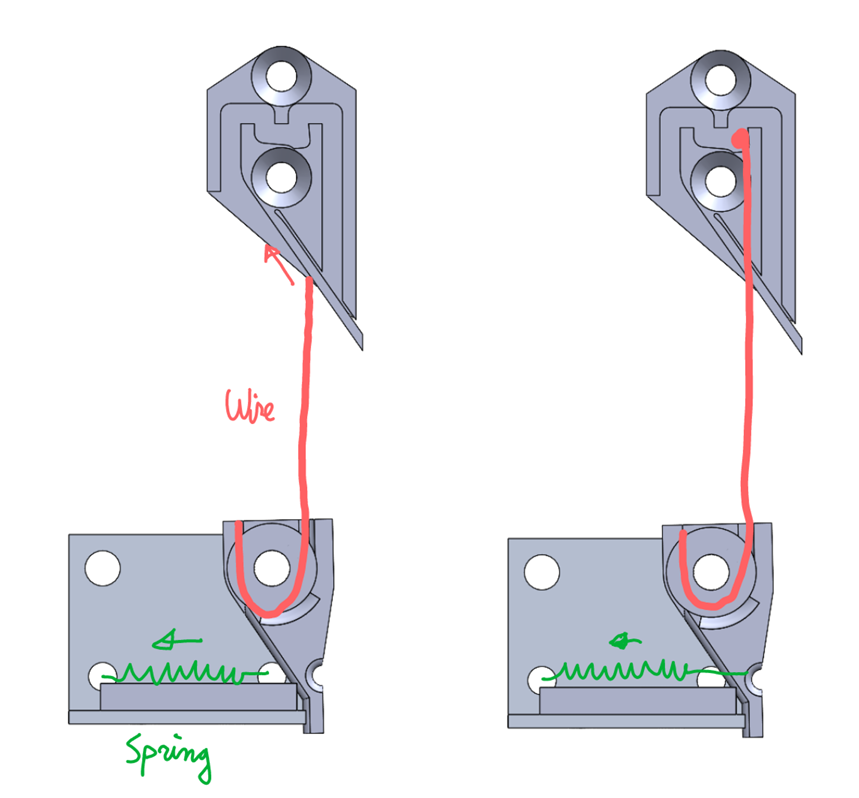
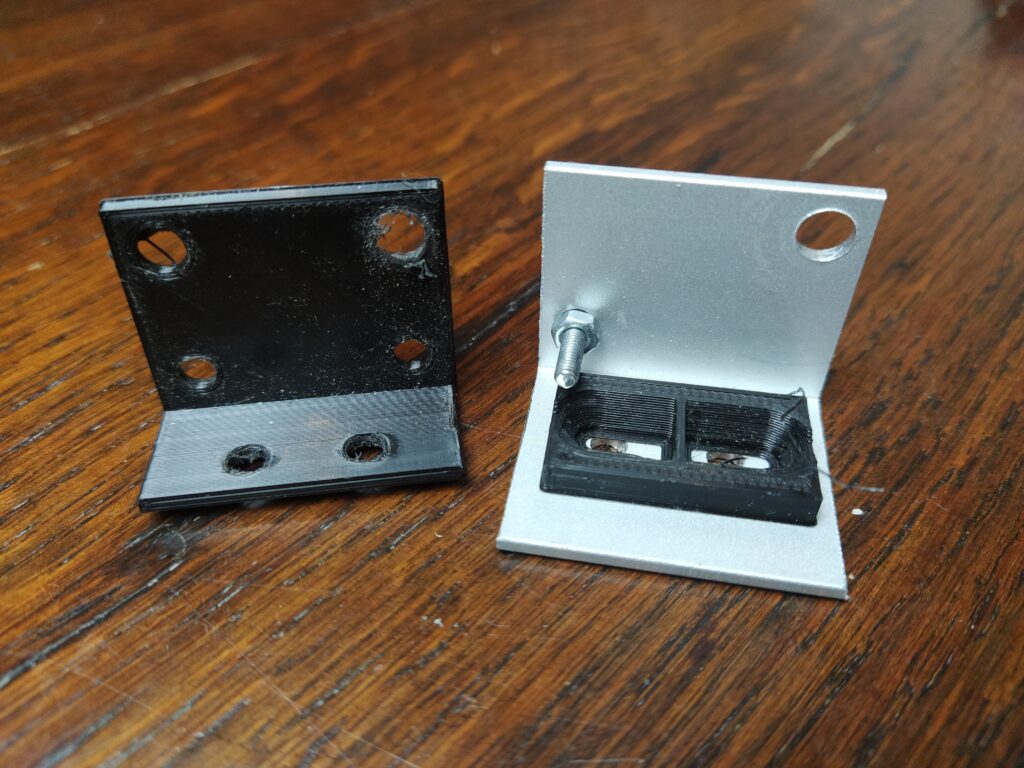
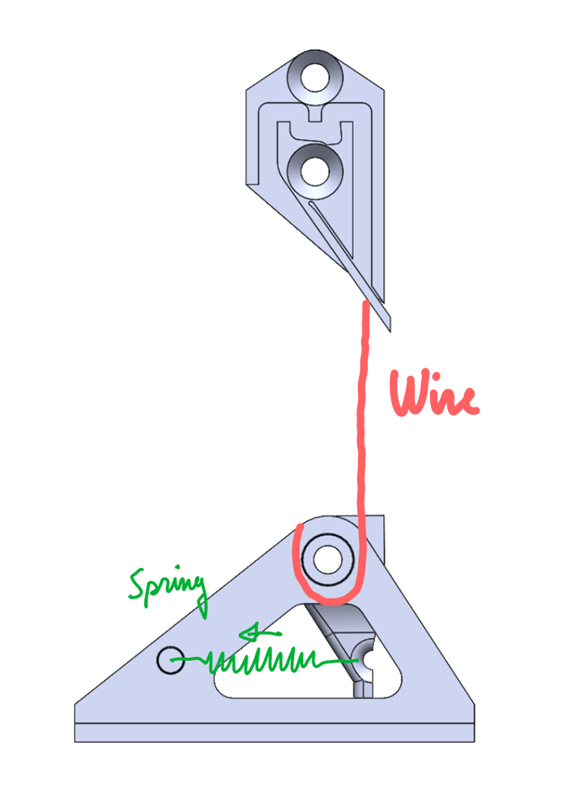
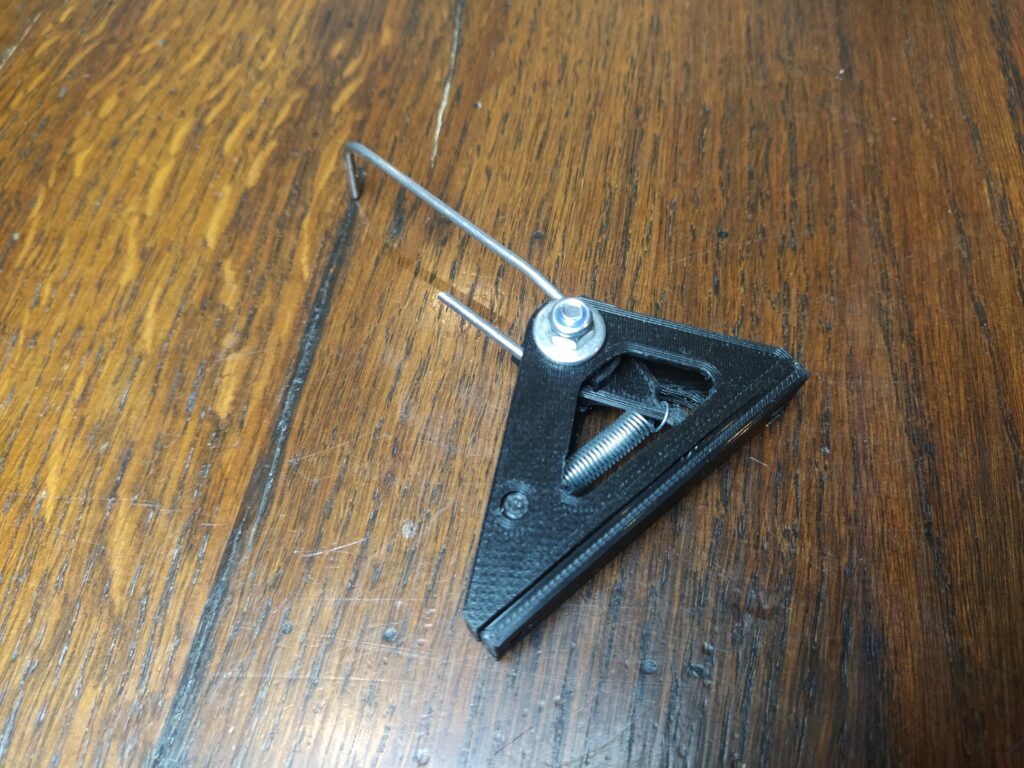
I started with a 3D printed guide block at the top where the wire moves trough for the different locking stages. The wire was connected to a 3D printed plastic body which was fit to an aluminium pieces (which later became a plastic one. See the one on the left in the right image). A spring was used to force the wire in the right position. For the aluminium part there was a plastic block with slotted holes to be able to adjust the position of the wire in its rest state. Well, there were lots of parts and a simpler design is still possible.
For the next design I didn’t change much to the guide block, but I made some changes to the wire holding body and spring design. I was trying to reduce the amount of time I needed to spend on the fabrication; so less aluminium and more 3D printing! It also reduced the amount of parts, but it could be improved even more!
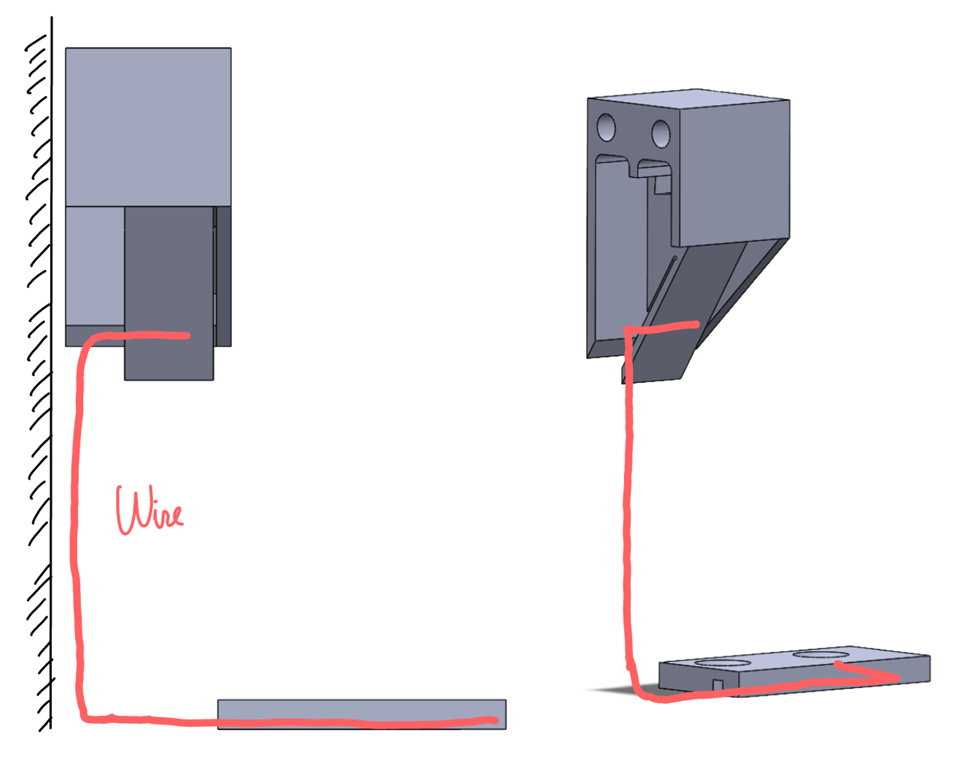
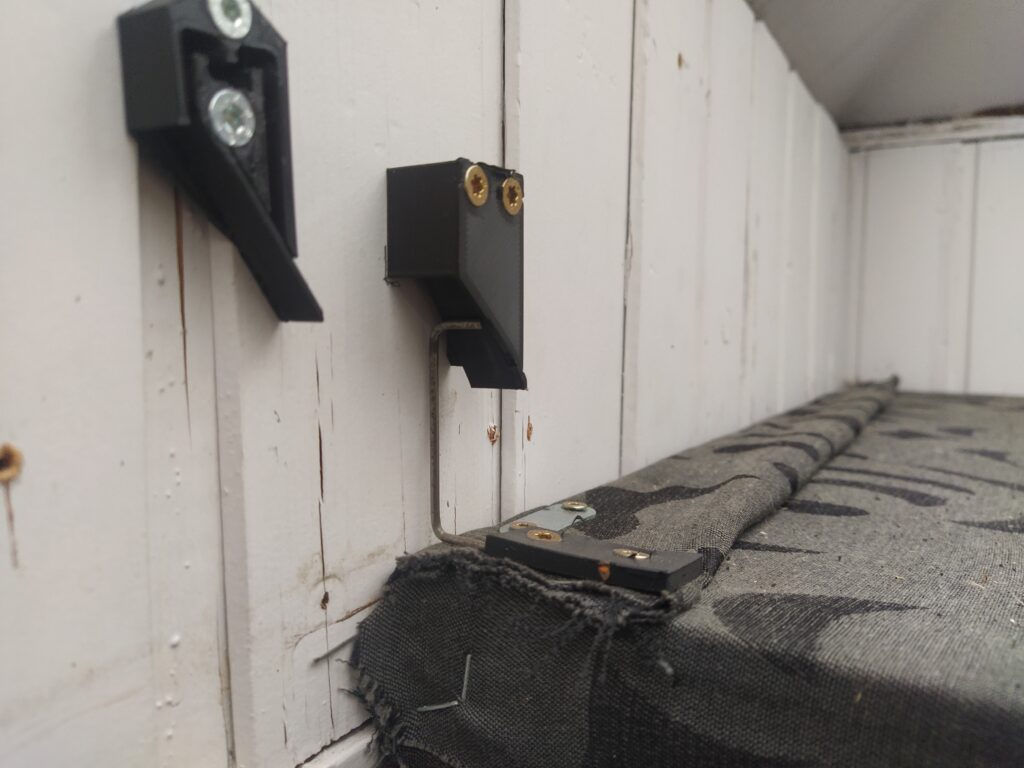
For the final design I got rid of the spring to force the wire into position. Instead, I relied on the wire to bend and twist when it is forced through the guide block. Also, I changed the orientation of the guide block such that the wire cannot drop out of it. With the previous designs it could bend backwards when force was applied forcing it to drop out of the guide block.
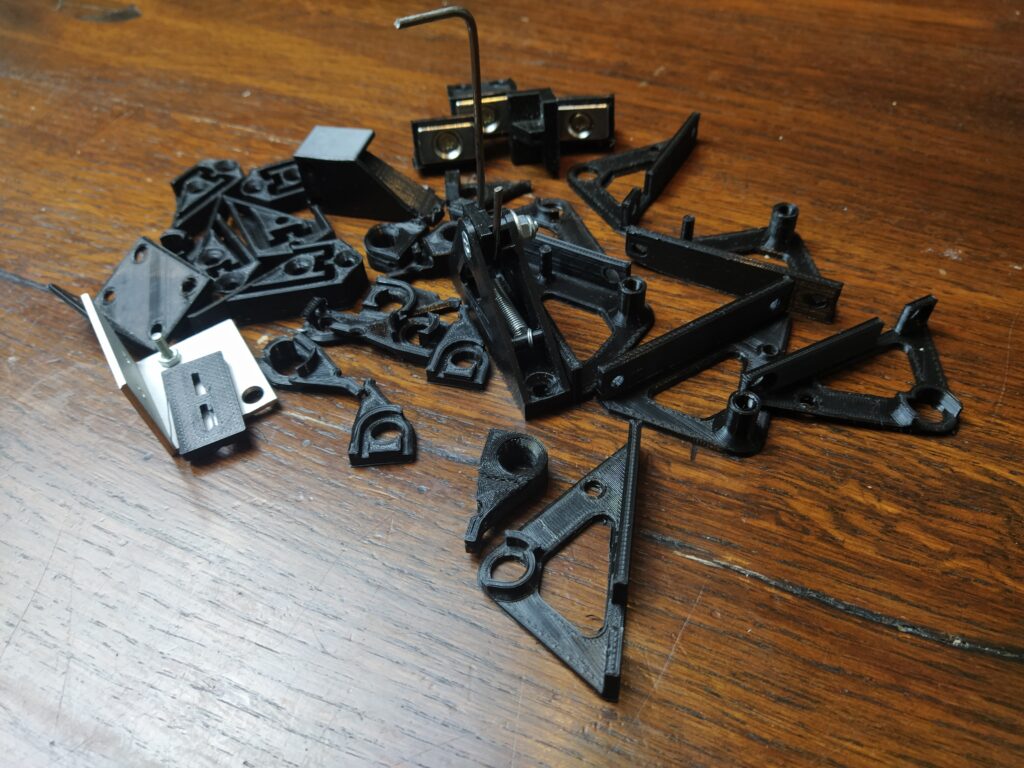
Below you will see a picture of the design iteration I went through. 3D printing is also called rapid prototyping and you can seen why…
On the right you see the snap lock in action in a slowmo movie. The snap locks are on each end of the latch. Until now they are very succesfull at keeping the pussy cats out.